Have you ever found yourself lying in bed, your body exhausted, but your mind and muscles still tense? In our high-pressure modern lives, residual muscle tension acts like a silent alarm, keeping your sympathetic nervous system on high alert and preventing you from reaching deep sleep.
Traditional pre-bedtime relaxation methods, such as meditation or a hot bath, focus on mental relaxation, but to truly unplug your body from standby mode, you need a tool that reaches deeper into the muscle fibers. No longer just for recovery, fascia guns are becoming a secret weapon for a growing number of people striving for quality sleep.
This guide will delve into the scientific principles of relieving muscle tension and provide you with an efficient and safe bedtime massage gun usage plan to help you calm your body, quiet your mind, and unlock restorative deep sleep.

1. Scientific Principle: Body Shutdown—Relaxation Equals Sleep
High-quality rest, especially restorative slow-wave sleep (deep sleep), requires your body to fully switch into parasympathetic nervous system mode—the command center for “rest and digest.”
Getting rid of the residual alarm of fight or flight
When you carry around accumulated stress or muscle tension from daily exercise or a sedentary job, this residual tension sends a low-level “alarm signal” to the brain. This prevents the body from fully disengaging its sympathetic nervous system (the fight-or-flight response). Even when you feel tired, parts of your body (like tight trapezius or calves) remain on standby.
The intervention of the fascia gun: Low-intensity, steady impact massage can effectively interrupt this tension cycle and promote muscle fiber relaxation. This physical relaxation signal will be quickly transmitted to the brain, effectively “lifting the alarm” and starting the body’s natural rest and repair process.
Key Links to Core Body Temperature
Using a fascia gun before bed can also gently stimulate blood circulation in the extremities. This improved circulation helps moderately distribute core body temperature to the extremities. This slight, natural drop in core body temperature is one of the key physiological signals that trigger the body’s sleep process.
2. Your Nighttime Relaxation Map: 4 Key Areas
The goal of a bedtime massage is to soothe, not stimulate. We should focus on areas that accumulate the most daily static tension and avoid the high-intensity stimulation used for recovery from exercise.
Area 1: Pressure Storage Room (Shoulders and Neck)
The trapezius and levator scapulae muscles are the most common storage areas for anxiety and stress. Relaxing this area can help prevent nighttime headaches and teeth grinding caused by muscle tension.
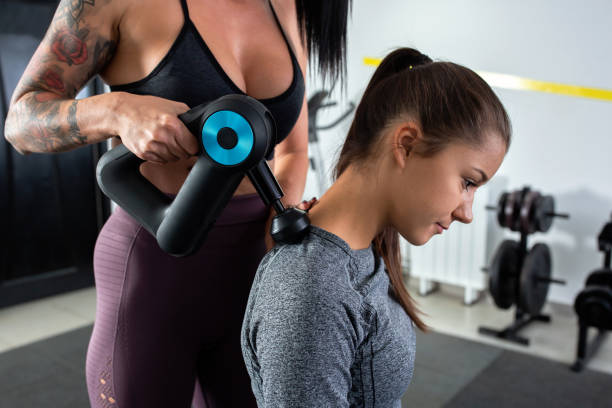
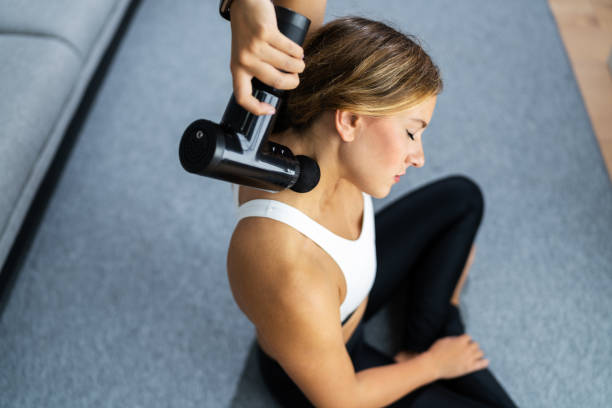
Technique: Using a ball or air-cushion head, apply the massage gun to the top of the shoulder and the bulge of the upper trapezius muscle at a low intensity (level 1-2). Be sure to avoid the cervical spine (neck bone) and throat area.
Zone 2: Sedentary Pools (Lower Back and Buttocks)
Prolonged sitting can cause a lot of tension to build up in your lower back and buttocks (especially the gluteus medius), which can affect your ability to relax in bed.
Technique: Use a flat or cushioned head at the lowest intensity setting (level 1). Slowly and smoothly stroke across the gluteus maximus and medius muscles, avoiding the spine and hip bones. Relax for 60–90 seconds on each side.
Zone 3: Unloading the Weight (Calves and Feet)
The accumulated fatigue from standing or walking for long periods of time can cause tightness in the calf muscles (gastrocnemius and soleus). Relaxing these muscles can help eliminate the feeling of heaviness in the legs.
Technique: Use a ball or flat head at medium-low intensity (level 2). Slowly move upward from just above the ankle along the calf muscles. Focus on relaxing each calf for 60 seconds.
Zone 4: Sensory Switch (Plantar Fascia/Foot)
The soles of the feet are home to a large number of nerve endings throughout the body. Gently stimulating the soles of the feet can bring powerful sensory shifts and immediate relaxation signals.
Technique: Sit comfortably with your foot flat on the ground or resting on your opposite knee. Using a low-impact air or bullet head, gently roll over the arch of your foot, avoiding the heel bone. 30 seconds typically produces an immediate calming effect.
3. The 5-Minute Sleep Protocol: 3 Golden Rules
The goal of a fascia gun massage before bed is to soothe, not stimulate. This gentle ritual must be clearly distinguished from the deep, vigorous percussive therapy used after exercise.
Keep the intensity at the lowest level: Always set the fascia gun intensity to the lowest level (level 1), and do not exceed level 2 when used for relaxation before bed. Excessive intensity will stimulate the nerves and make the body excited.
Move slowly and steadily: Slow down your movements to allow the gentle vibrations to “wash” your muscles. Keep the total duration of each zone short, ideally 1-2 minutes.
Adhere to the time limit: The entire bedtime relaxation ritual should last no more than 5-8 minutes. Prolonged massage increases local blood circulation and body temperature, which may affect sleep.
In conclusion:
The fascia gun is an underestimated tool for modern people to fight against stress and insomnia. It provides a precise physical method to cut off the residual “alarm signals” during the day and help your body smoothly transition from a high alert state to a deep rest state.
Incorporate a fascia gun into your bedtime ritual—think of it as your body’s own dedicated “off switch,” much like brushing your teeth is a hygiene habit. Use this gentle 5-minute massage to create a stress-free “landing zone” for your muscles and nervous system.
Do you currently prefer mental methods (like meditation) or physical methods (like stretching) to prepare for bed? Of these four areas (neck and shoulders, hips, or feet), which one do you think needs the most attention in your nightly ritual?