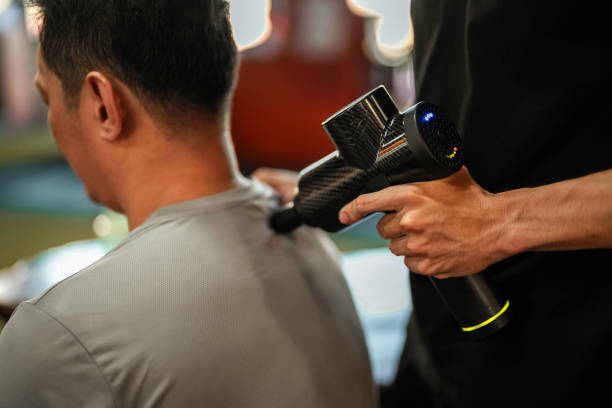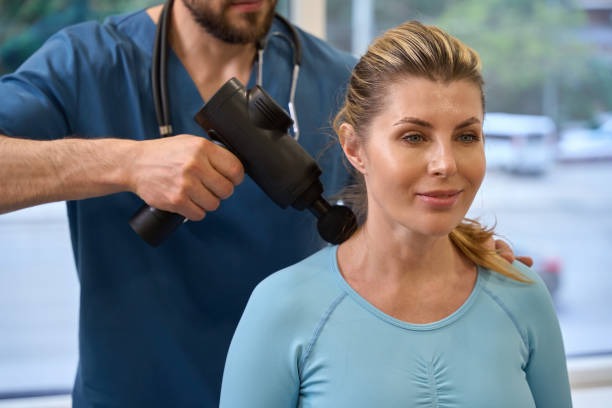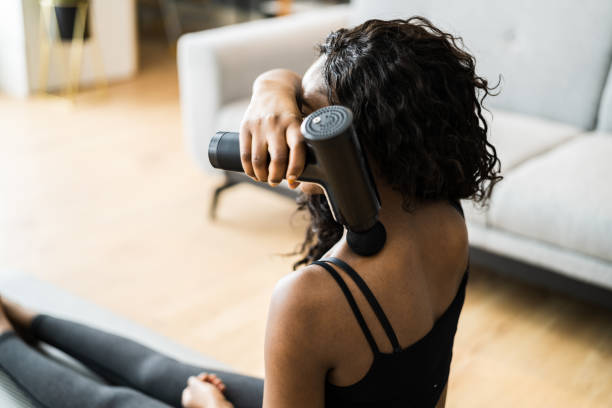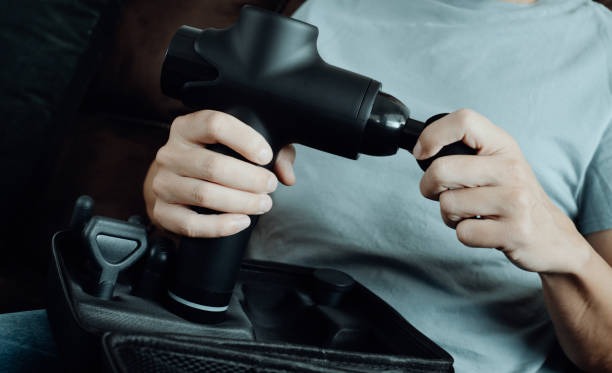
In the recovery toolbox, the Massage Gun and Kinesio Tape are undoubtedly two superstars. The Massage Gun uses rapid vibrations to break down deep muscle knots, while the Kinesio Tape provides stable support and protection through elasticity.
But have you ever wondered: Can I use them all at once? Or, what’s the best order to use them?
The answer is: You can’t use them simultaneously on the same area of skin, but you can cleverly combine them to create a complementary “dual recovery process .” The core concept of this process is “loosen first, then strengthen”—first using the fascia gun for deep relaxation and blood circulation, then using the muscle tape for prolonged posture guidance and protection. This article will break down the logic, techniques, and practical application scenarios of this process to help you elevate your recovery efficiency to a new level.
A disruptive combination: The difference between the working principles of fascia guns and muscle tape
To effectively combine these two tools, we first need to understand the distinct roles they play in muscle recovery. Think of them as two specialists on a medical team:
Fascia gun: dynamic “surgeon”
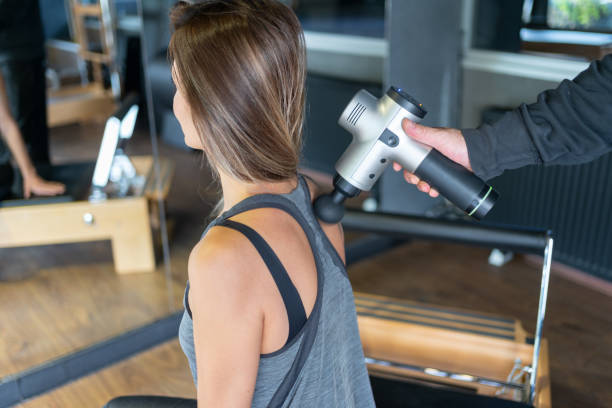
The core of the fascia gun lies in dynamic impact . It uses high-frequency vibration to vertically direct energy into the muscle and fascia layers.
Recovery Focus: Treating acute or deep muscle tension, trigger points, accelerating blood circulation and lymphatic metabolism.
When to use: Before and after exercise, as a temporary, active muscle intervention.
Muscle Effect Patch: Static “Long-term Protection”
K-Tape, through its unique elasticity and viscosity, gently lifts the fascia under the skin without restricting the range of motion.
Recovery Focus: Provides continuous sensory feedback , relieves pain, stabilizes joints, guides correct movement patterns, and continuously promotes edema resolution (lymphatic drainage).
When to use: During exercise or rest, as a long-term, passive support method.
Key process: A three-step approach of “loosening first, then tightening” to achieve dual effects
Since the muscle effect patch needs to be in direct contact with clean and dry skin, the best combination order is very clear: you must use the fascia gun first, and then apply the muscle effect patch.
Step 1: Deep Release & Activation
This is a crucial step in laying the foundation for taping. The goal is to completely relax the targeted muscles and ensure there are no residual deep tension points in the taped area.
Target and Tool: Identify your most tense muscle groups or trigger points. Use the round or flat tip for a 1-2 minute relaxing massage (medium to low intensity) on large muscle groups, or the bullet tip to precisely disrupt trigger points.
Technique: Move slowly along the muscle fibers, focusing on relieving deep tension rather than just the surface.
Core Step—Through Cleansing: This is key to success. After the massage, if you’ve used any essential oils, lotions, or sweat, you must thoroughly clean the massaged area with an alcohol pad or mild cleanser and ensure the skin is completely dry . Any residue will cause the patch to fall off within a few hours.
Step 2: Static Support with Kinesiology Tape (Support & Patterning)
Once the muscles are completely relaxed by the fascia gun, the role of the muscle patch is to “solidify” and “maintain” this relaxed state.
Choose a taping method: Choose the appropriate taping technique based on your goals:
Pain relief: Use 25% light tension taping (I type or Y type) along the painful area or muscle direction.
Posture correction: Taping (Y-shaped or H-shaped) on muscles that require continuous stretching or guidance provides continuous “biofeedback” to remind you to maintain correct posture.
Taping: Follow the standard K-Taping process. The tension of the tape should be moderate to avoid excessive tightness that may cause blood flow obstruction.
Continued protection: After taping is complete, the SK-II Tape lasts for 3 to 5 days, even when you’re not exercising, providing continuous support and recovery as you move.
Real-world application case: Best practices for dual recovery
This “loosen first, then strengthen” strategy is particularly suitable for dealing with stubborn strains and recovery.
| Scenario | Recovery Goal | Fascia Gun Steps (“Loose”) | Steps of using the muscle patch (“solidification”) |
| Office workers’ shoulder and neck strain | Correct rounded shoulders and relieve trapezius muscle tension. | Use a U-shaped head/flat head to relax the trapezius and sternocleidomastoid muscles at a low intensity to break up tension points. | Supportive taping: Extend the tape from the shoulder blades up along the spine, guiding the shoulders to open backwards and maintain a correct sitting posture. |
| Runner’s knee/ITB syndrome | Relieves tension in the iliotibial band (ITB) and lateral quadriceps. | Use a flat head with moderate intensity to deeply release the lateral quadriceps and ITB, focusing on the starting and ending points. | Pain Relief Taping: Tape along the outside of your quadriceps or around your knee to reduce friction and pressure while running. |
| Plantar fasciitis | Treats tightness in the calf muscles and soles of the feet. | Use the bullet tip to precisely target trigger points in the calves (gastrocnemius/soleus) and soles of the feet. | Supportive taping: taping the arch of the foot provides continuous fascial support and reduces plantar pressure. |
Summary: From temporary firefighting to long-term maintenance
The combination of the fascia gun and the muscle tape has changed the way we look at recovery: the fascia gun is like a doctor in the emergency room, quickly “untying the knots in the muscles”; and the muscle tape is a rehabilitation coach, continuing to provide “long-term support and posture guidance” after you leave the clinic.
Through this “loosen first, then strengthen” strategy, you’re no longer just temporarily relieving pain. Instead, you’re freeing your muscles from tension and training them to stay in peak condition through sustained support. This systematic approach is the true path to long-term performance recovery.
Have you tried this “loosen first, then tighten” recovery strategy? What’s your favorite fascia gun technique for using with Kinesiology Tape? Share your experiences in the comments!