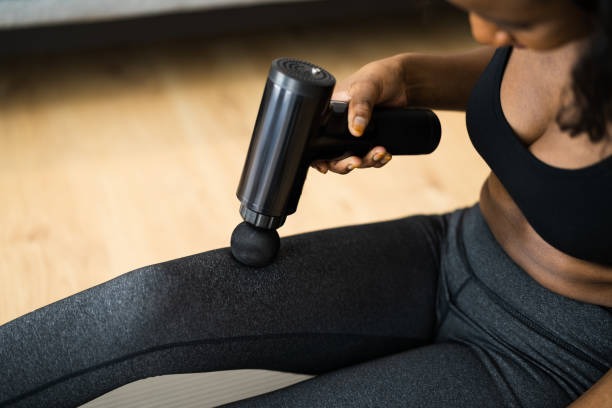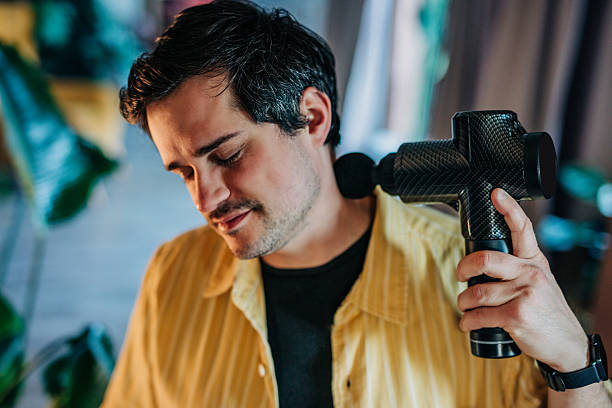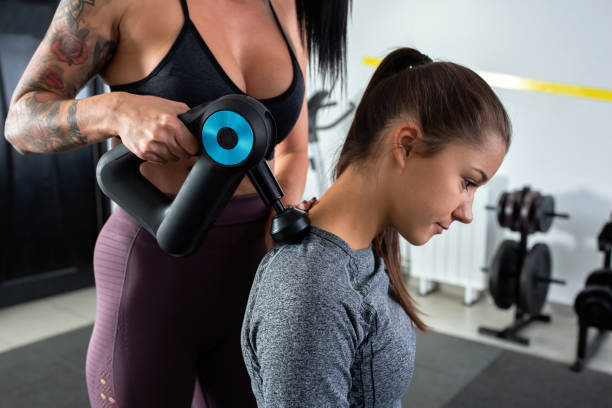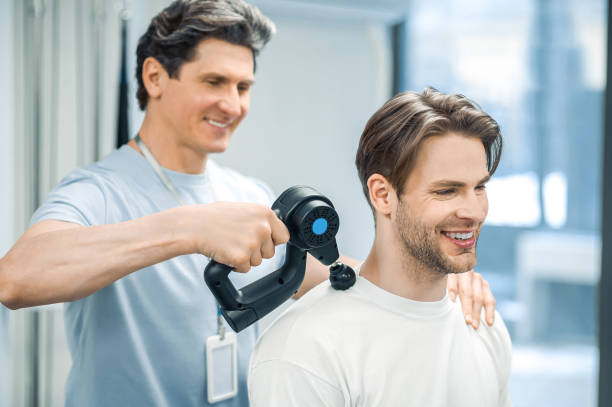
Your high-frequency percussion fascia gun is powerful—it can eliminate muscle knots and provide immediate relief. But if you use it as your sole recovery tool, you’re missing out on a more comprehensive approach. Think of it as a “specialist” specifically for rapid repair of the nervous system and localized muscle tension .
For truly comprehensive, efficient recovery, you need complementary tools that address areas a fascia gun can’t touch: systemic circulation, sustained deep pressure, and temperature regulation .
Don’t let your post-workout recovery feel like a one-man show anymore. Here are three non-gun recovery allies that complement the fascia gun and help you build the ultimate recovery toolbox:
1. Dynamic Air Compression Recovery Boots/Leg Sleeves
If a fascia gun is a “powerful local welder,” then compression recovery boots are the “ultimate full-body circulation vacuum cleaner.” They introduce an element of systemic recovery that localized percussive massage can’t.
Complementary advantages: systemic detoxification and swelling reduction
The function of the fascia gun: to achieve rapid and local muscle relaxation through high-speed impact.
The advantage of recovery boots: They use sequential pneumatic compression —a powerful air pressure massage that pumps blood and lymph fluid from your extremities back into your torso like toothpaste. It’s like having multiple physical therapists squeezing your legs in perfect rhythm.
Effect: This forced cycle is very effective in clearing metabolic waste products such as lactic acid and significantly reducing delayed onset muscle soreness (DOMS) and swelling in the limbs. This is a systemic function that fascia guns cannot achieve on a large scale.
Recommended usage scenarios
Who’s it for: Endurance athletes, heavy lifters (squats, deadlifts), or anyone experiencing severe leg fatigue and edema.
Usage plan: Wear the recovery boot for 30 minutes of full-body blood “flush”, then use the fascia gun to target any stubborn deep pain points in the hips or shoulders.
2. Foam Roller and Vibrating Roller
The foam roller—a tool often abandoned after the advent of the fascia gun—still has an irreplaceable role in fascial release, especially for large and dense areas.
Complementary advantages: deep shear and large area coverage
The function of the fascia gun: rapid vibration and rapid impact, focusing on neuromuscular feedback.
Advantages of the foam roller: It uses body weight to apply continuous and uniform pressure to muscle groups , generating shear force , which is a classic method for breaking up large areas of fascia adhesions and increasing **joint range of motion (ROM)**.
Advantages of a vibration roller: It’s a perfect combination, combining the large-area pressure of a foam roller with the stimulating vibrations of a fascia gun, typically making the experience more comfortable and penetrating.
Recommended usage scenarios
Recommended for: Targeting large muscle groups like the quadriceps, latissimus dorsi, or hamstrings that require steady, sustained pressure .
Usage scenarios: The roller is used first for a comprehensive, deep relaxation and “surveying” process to address large areas of tension. The fascia gun is then used for a more precise and aggressive treatment of any remaining local knots revealed during rolling.
3. Hot and cold compress devices
The body’s primary response to strenuous exercise involves heat and inflammation. Temperature regulation is often the missing link in SMR recovery, as most fascia guns only work mechanically.
Complementary strengths: inflammation control and tissue preparation
The function of the fascia gun: mechanically relieve pressure.
Heat (heating pad/wrap): Increase local blood flow and help relax stiff deep tissues. Applying a 10-15 minute heat compress before using the fascia gun can pre-soften the muscles, making the fascia gun’s impact more comfortable and deeper.
Cold compress (ice pack/cold wrap): Constricts blood vessels , reducing blood flow to the injured area, thereby controlling inflammation and swelling . This is crucial for treating acute strains or micro-trauma after exercise.
Recommended usage scenarios
Acute injury (within 24-48 hours): Use cold compresses first . Never use a massage gun on a fresh injury; ice is the first priority to control swelling.
Chronic stiffness or pain: Apply heat first. Then use a massage gun after applying heat to optimize muscle flexibility and comfort.
Recovery Combo: While you’re massaging your calves or shoulders with a massage gun, you can use a wearable heating pad to deliver gentle, continuous heat therapy to your lower back.
Summarize:
The fascia gun is a tool used to quickly break the deadlock and activate , while its best partner plays the role of system cleansing, deep extension and temperature control .
| Recovery Goal | The role of the fascia gun (feat.) | Complementary tool recommendations (system support) |
| Systematic cleaning | Local quick repair | Compression Recovery Boots (Full Body Detox and Swelling Reduction) |
| Deep tissue stretches | Quick spot massage | Foam Roller (Sustained Shear and ROM) |
| Inflammation management | Mechanical relief | Hot/cold compress device (temperature regulation and control) |
By combining the speed of impact with the systematic force of compression, the depth of rolling, and the therapeutic benefits of temperature, you can move from simply reacting to soreness to optimizing your recovery process.
Which new companion will be joining your recovery arsenal this week?