If you’ve spent more than five minutes in a modern gym, you’ve undoubtedly encountered this popular recovery debate: foam roller vs. fascia gun . Both tools are giants in the field of “self-fascia release,” promising to eliminate muscle tension and, crucially, improve your flexibility .
But which tool is more effective? And by how much? While we can’t guarantee a precise number (like, say, a 5cm increase in your toe-reach) because flexibility improvements are highly individualized, we can compare their effectiveness in increasing range of motion (ROM) based on sports science research . We’ll delve into the mechanisms and measurable results of both tools to see which one is most worthy of adding to your gym bag.
The Science of Flexibility: How Does SMR Improve Joint Mobility?
Both foam rolling and massage guns improve flexibility by reducing tissue stiffness by targeting fascia (the connective tissue that wraps around muscles). However, they work in very different ways, utilizing different physiological pathways.
1. Foam Roller: Pressure and Mechanical Shear
Foam rolling is a classic low-tech option. It uses your bodyweight to apply sustained, broad-area pressure to your muscles .
How it works: This pressure creates shear forces that help break down fascial adhesions and knots. Crucially, it also sends signals to your nervous system (specifically the Golgi tendon organ), effectively telling your muscles to “relax,” reducing muscle tension (muscle tone) and thereby increasing joint mobility.
What it feels like: It’s a slow, deliberate process where you use your body weight to “crush” large muscles—a deep, often painful, but thorough experience.
2. Fascia gun: high-frequency shock and vibration
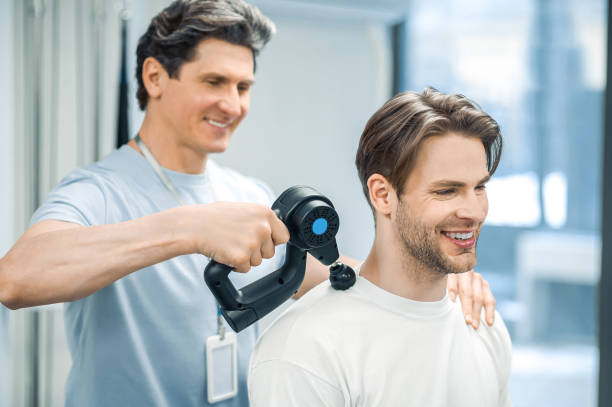
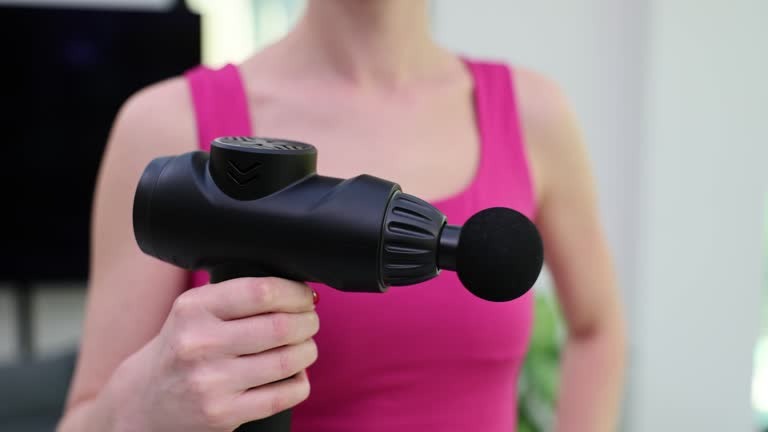
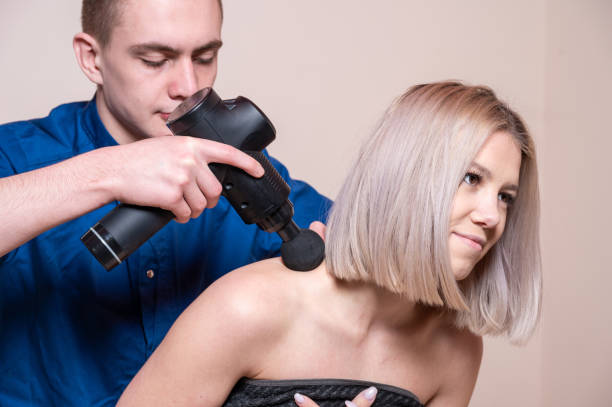
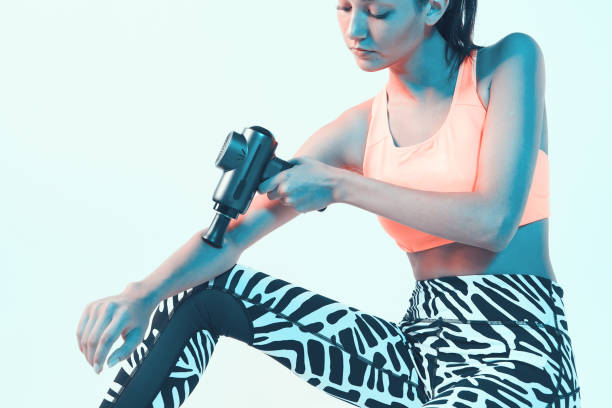
The High Frequency Percussion Massage Gun is a stylish, powerful new tool that uses high-frequency, short-range bursts of percussion (thousands of times per minute) to target localized areas.
How it works: This rapid mechanical stimulation bombards your proprioceptors (sensors that sense body movement and position). This powerful sensory input effectively distracts the nervous system , overriding the pain and tightness, resulting in immediate neurological relaxation of the muscles .
What it feels like: Compared to rolling, this is an intense, fast-acting treatment that targets specific trigger points (knots), providing quicker, more localized relief than foam rolling.
Head-to-head comparison: Which tool gives the highest ROM boost?
measurable, short-term improvements in range of motion (ROM) , the scientific verdict is generally a draw: Both methods are highly effective and produce similar immediate results.
Studies comparing the acute effects of impact therapy and foam rolling generally find that both tools can significantly improve the ROM of target muscle groups (such as the hamstrings or hip flexors) within a few minutes.
| Features | Foam roller (continuous pressure) | Fascia gun (rapid impact) |
| Instant ROM Boost | High. Provides statistically significant, rapid improvements in flexibility. | High. Provides similar or even faster flexibility gains than foam rolling due to shorter usage time. |
| Impact on strength | Negligible. You can roll before a workout without sacrificing maximum strength—a key advantage over prolonged static stretching. | Negligible. Suitable for use during warm-up to increase ROM without muscle fatigue. |
| Time efficiency | Moderate (usually 60-90 seconds per area). | High (usually 30-60 seconds per part). |
| pain relief | Excellent, but requires full weight bearing on a painful spot. | Excellent, usually “numbs” and relieves local pain faster. |
Key Takeaway: Speed vs. Coverage
While the immediate increase in ROM may be statistically similar, the actual difference comes down to the application:
If you need to quickly “unlock” before lifting weights: The fascia gun is faster. Targeting tight hip flexors with a fascia gun for 30 seconds may yield the same ROM improvement as rolling for 90 seconds.
If you need a full body rinse after lifting weights: Foam rolling provides a more even, wide-area relaxation , which is great for overall blood circulation and deep recovery after heavy compound movements.
The Ultimate Strategy: Combining SMR with Stretching
The biggest mistake people make is thinking these tools can permanently replace stretching. They can’t. Flexibility isn’t just about acute ROM; it’s about maintaining those gains.
To maximize and maintain your flexibility, you must use SMR to prepare for stretching .
| Scenario | Best Practices | principle |
| Warm-up phase | First SMR (fascia gun/foam roller), then dynamic stretching. | SMR reduces muscle tension and unlocks tissue. Dynamic stretching then moves the joint through this newly acquired range of motion , preparing it for heavy loads. |
| Dedicated Mobility Training Day | SMR (foam roller) + static stretching/PNF stretching. | Foam rolling digs deep to eliminate tension (SMR), and the subsequent long-hold stretch effectively re-educates muscle length , converting temporary ROM into long-term flexibility. |
Export to Google Sheets
Bottom line: Don’t ask which tool gives you more flexibility, ask which tool works best for you and your daily habits .
On a budget and looking for a thorough treatment: stick with the foam roller . It provides deep, comprehensive fascial release—it just requires a bit more effort.
Short on time and looking for precision: Invest in a fascia gun . It’s unmatched for fast, localized relief and maximizing pre-exercise ROM without wasting time.
Are you a foam roller devotee, or have you turned to the high-tech power of a massage gun? Tell us which tool has helped you achieve your flexibility goals!