If you’re a runner, you know the frustration of chronic pain. Two of the most common culprits that force us to stop training are sharp pain on the outside of the knee—iliotibial band syndrome (ITBS)—and persistent, dull heel pain—plantar fasciitis.
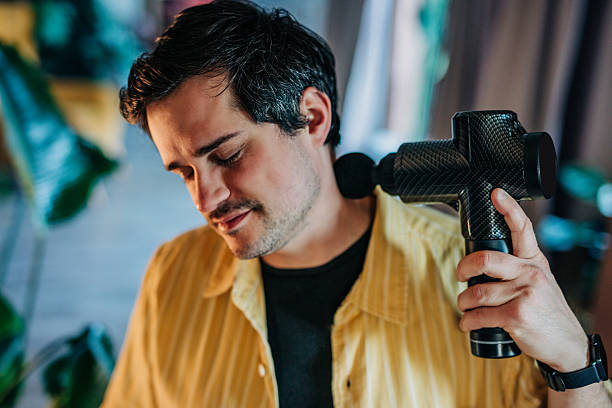
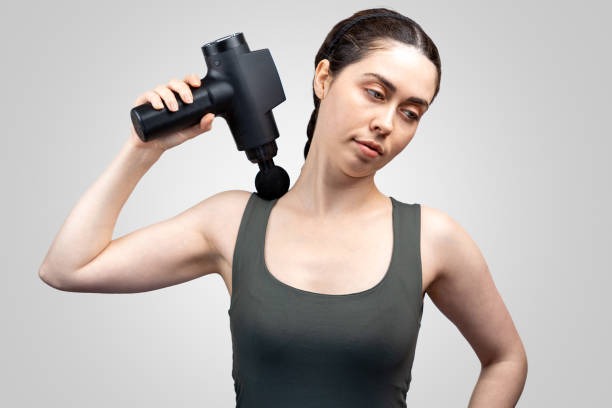
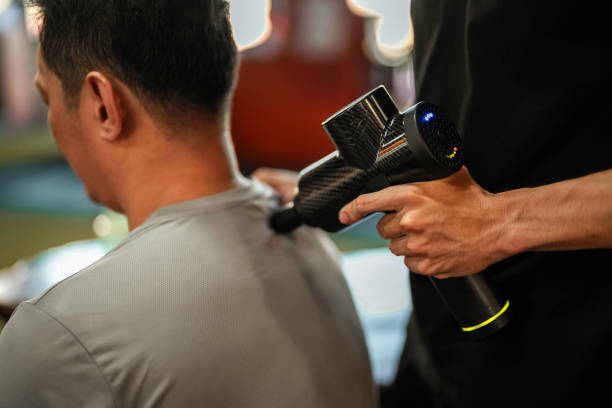
While traditional tools like stretching and foam rolling are essential, they often struggle to reach the true trigger points (or knots) of pain, effectively releasing chronic tension. The fascia gun (or percussive massager) is the key to changing this. It delivers targeted, high-speed percussive therapy that goes directly to the root of the problem, significantly accelerating recovery and getting you back on the track sooner.
This comprehensive guide breaks down the science and provides a step-by-step blueprint for safely and effectively using a massage gun to treat ITBS and plantar fasciitis.
1. Conquer ITBS: Targeting the Root of Pain
The iliotibial band (ITB) is a thick, fibrous band that runs from the hip to the knee. A key anatomical point that’s often misunderstood is that the ITB itself is a tendon-like structure that can’t be “stretched” or “relaxed.” Pain you experience on the outside of your knee is often caused by overlying muscles—the tensor fasciae latae (TFL) and gluteus maximus—excessive tension on the ITB.
1.1 The True Trigger Point: TFL and Gluteal Muscles
To resolve ITBS, you must release the source of tension from your hips.
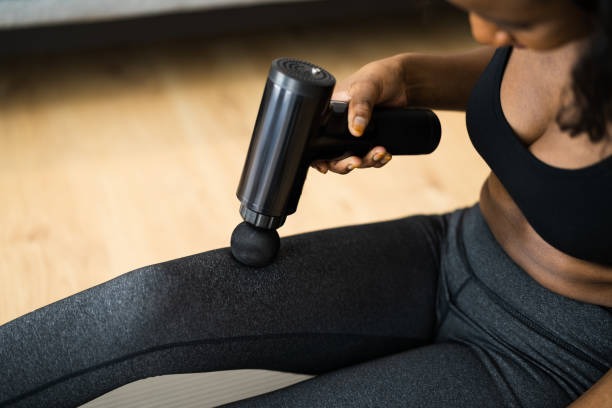
Massage head selection: Ball head or flat head is recommended. They have moderate coverage and a firm surface, which is ideal for targeting large, dense deep tissues.
Intensity Recommendation: Start at a low-to-moderate intensity (2-3). The TFL is a small, sensitive muscle, and gentle pressure is important to avoid bruising.
4-step action plan:
To locate the TFL: Find the outer front edge of your hip bone (iliac crest). The TFL is located just below this point.
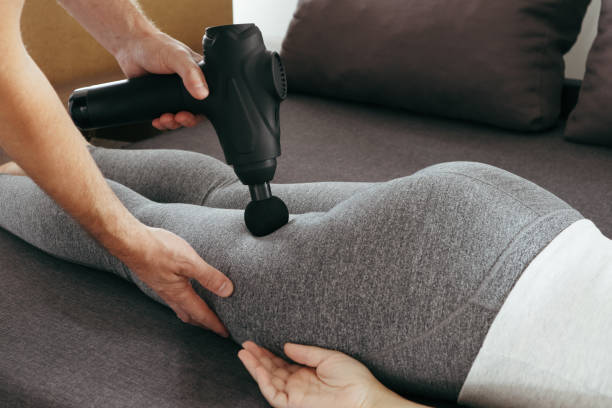
Massage path: Slowly and deliberately move the fascia gun back and forth over the TFL and upper gluteus maximus. When you find a particularly tight trigger point, you can stop and gently hold pressure for 20-30 seconds.
Critical Safety Zones (No-Go Zones): Never apply the massage gun directly to the ITB band itself (the line along the outside of the thigh) or to the bones and joints on the outside of the knee. Always focus on the soft tissue muscles around and above the ITB.
Pre-Run Activation: Before your run, perform quick sweeps of your hips and TFL at a very low tempo (1-2). This helps activate the muscles and prepare them for the upcoming movement.
2. Eliminate foot pain: Treat plantar fasciitis
Plantar fasciitis is characterized by a sharp, stabbing pain in the back of the heel, most noticeable with the first step in the morning or when starting to walk after sitting for a long time. Using a fascia gun on the foot can increase blood flow to the area and, more importantly, relax the calf muscles that pull on the foot, relieving tension.
2.1 Synergy: Joint relaxation of the foot and calf
The key to treating plantar fasciitis is to realize that tightness in your calf muscles often creates tension, which in turn pulls on your plantar fascia. Therefore, you must address both areas simultaneously.
Massage head options: For feet, use the Bullet Head for deep, precise pressure, or if the soles of your feet are highly sensitive, use the Cushion Head. For calves, use the Ball Head.
Intensity recommendation: Low to medium intensity (levels 2-4). Your feet are very sensitive, so be sure to listen to your body and start with a low intensity.
3-step action plan:
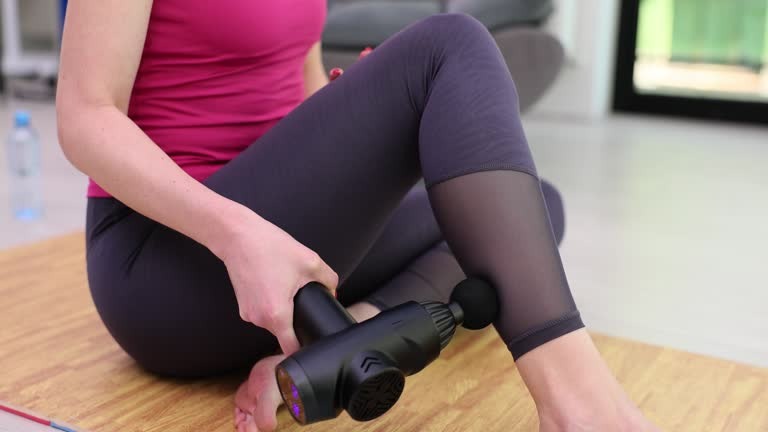
Plantar Release: Sit in a chair and cross your foot over your opposite knee. Start at the non-bony area of your heel where you feel pain and move slowly along the arch of your foot toward your toes. Avoid direct contact with your heel bone.
Precision Press: Apply gentle pressure to the tightest part of the arch, holding for no more than 10 seconds to release tension.
Root Cause (Calves): This is the most crucial step. Use the ball head to massage your calf muscles (gastrocnemius and soleus) for 1–2 minutes. Relaxing your calves significantly reduces the strain and pressure on your heels, which is key to addressing the root cause.
3. Fascia Gun Safety Checklist: Golden Rules for Runners
Whether you are dealing with ITBS or plantar fasciitis, safe and effective use of the fascia gun is essential to ensure recovery.
Avoid joints and bones: Use the massage gun only on muscles and soft tissue. Never use it directly on bones, major joints (like the knee or ankle), tendons, or any area that is inflamed or swollen.
Measuring Discomfort: Your pain should be less than 5 out of 10. If you experience sharpness, tingling, or numbness, reduce the intensity or stop treatment immediately.
Keep moving: Do not let the fascia gun remain stationary on the same muscle point for more than a few seconds. Keep the fascia gun moving slowly over the muscle; movement is safer and more effective than static pressure.
in conclusion:
The fascia gun’s percussive therapy isn’t a replacement for professional physical therapy, but it’s the sharpest scalpel you can add to your home rehabilitation toolbox. It can precisely penetrate deep trigger points in the TFL, buttocks, and calves, addressing deep knots often missed by stretching and foam rolling.
By incorporating a fascia gun into your pre-run activation and post-run cool-down routines, you can significantly reduce downtime due to these two common running injuries. It’s a long-term investment in sustainable, pain-free running.
Which of these two conditions is bothering you the most right now? Which massage head would you like to try first?