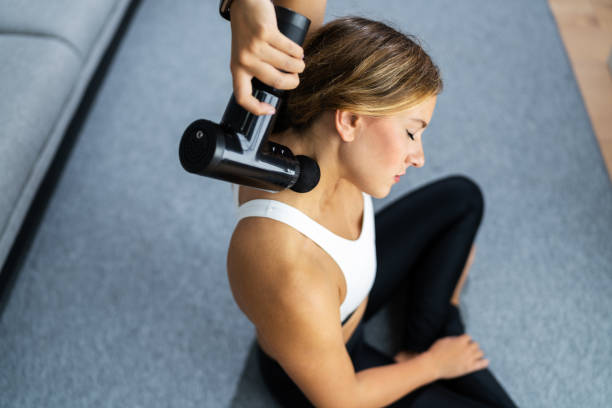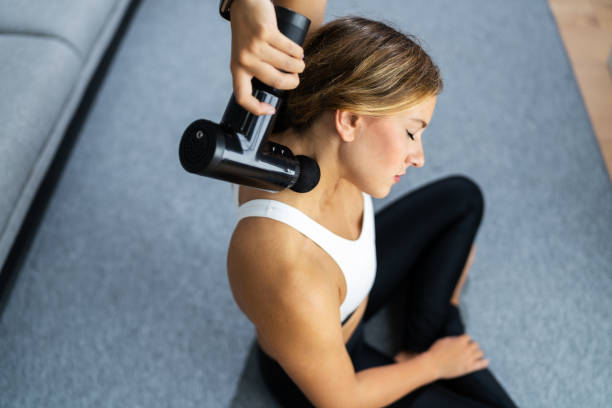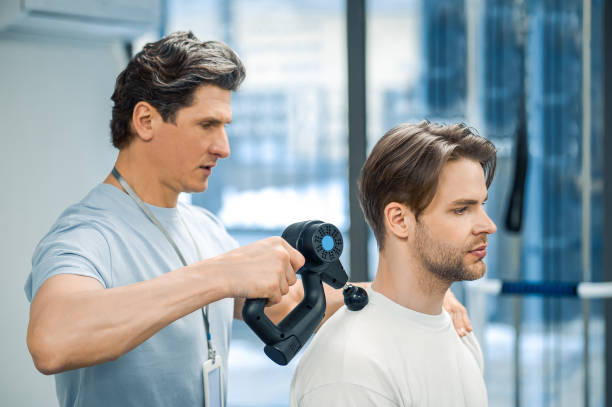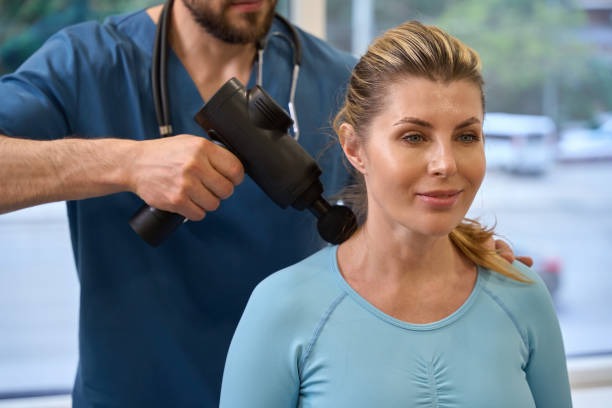
You’ve just completed an epic squat session or finished that long-awaited half marathon. Now, your muscles are screaming, and you have to make a choice in the world of self-myofascial release (SMR): grab your foam roller and writhe on the floor in agony, or fire up your massage gun and let the high-frequency percussion provide quick relief?
Both tools—the foam roller and the massage gun—are powerful tools for combating muscle tension and improving recovery efficiency, but their methods, effectiveness, and application scenarios differ significantly. It’s a battle of “old-school pain versus new-school speed.” Today, we’ll break down the underlying mechanics of these two recovery methods and conduct a hardcore comparison to help you decide: which should play a leading role in your recovery regimen?
In-depth comparison of mechanisms: compression vs. percussive therapy
The fascia gun and foam roller have the same goal: to relax tight muscles and fascia, but the “means” they use to achieve their goals are completely different.
1. Foam Roller: Bodyweight Continuous Press (SMR)
Foam rolling represents the classic SMR method, relying on your body weight and gravity to apply a continuous, progressive pressure to your muscles .
How it works: You press your body weight onto the axis, slowly rolling it to “knead” and “squeeze” the muscles. This sustained pressure is designed to mimic a deep tissue massage, mechanically stretching and releasing tension within the fascia.
Challenge: Because you need to use your body to balance and apply pressure, it is difficult to accurately focus all the pressure on a deep trigger point. At the same time, this active pain may cause you to unconsciously contract your core muscles to resist the pain, which may affect the relaxation effect.
2. Fascia Gun: High-Frequency Impact and Nerve Reflex (Percussion Therapy)
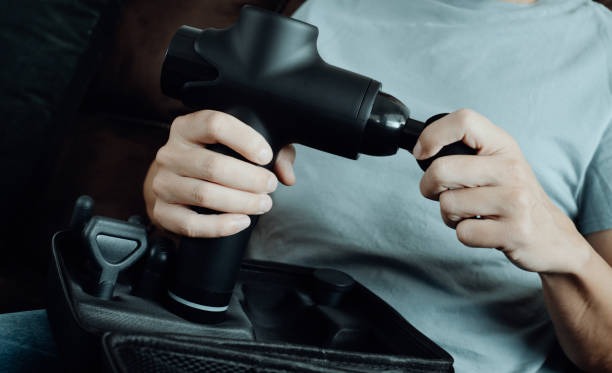
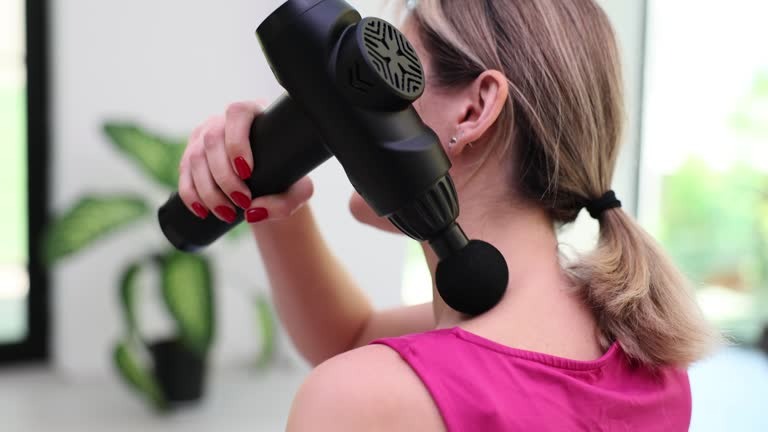
The fascia gun is a high-tech solution that uses high-frequency, vertical impact force to accomplish the relaxation task.
How it works: The impact penetrates deep into the muscle, stimulating sensory neurons in the tendon (such as GTOs) . This stimulation sends signals to the nervous system, inducing a reflex relaxation of the muscle . Think of it as a neurological “shortcut . “
Unique advantages: The **” Pain Gate” effect** of the fascia gun means that high-frequency vibrations can cover or reduce your pain, allowing you to achieve deeper relaxation without much pain.
Scorecard Showdown: Efficiency, Depth, and User Experience
If you think of exercise recovery as a race, here’s how the foam roller and fascia gun perform on each track:
| Recovery Dimension | Foam Roller | Massage Gun |
| Deep relaxation effect | Good. Depth is limited by weight and angle, making it difficult to reach certain deep spots. | Excellent. Strong vertical impact force can more effectively penetrate multiple layers of tissue and directly reach stubborn trigger points. |
| Efficiency and time cost | Low. 3-5 minutes of slow rolling for each major muscle group. | High. Only 30 seconds to 1 minute per area. Quick recovery, perfect for busy individuals. |
| Convenience and accessibility | Low. Difficulty reaching the upper back, shoulder blades, and some arm areas; requires core strength and good balance. | Excellent. One-handed operation allows easy access to most areas of the body and minimal effort. |
| Input costs | Low. (Prices are usually less than $50) | High. Premium brand equipment is more expensive. |
| User Experience | Painful but satisfying (“pain and joy”). Requires active effort. | Controllable impact. High-frequency vibration disperses pain and makes the process easier. |
The fascia gun excels in surgical precision and efficiency
If you’re looking for efficiency, depth, and precision , the fascia gun is the clear winner. It’s the “surgeon’s scalpel” of sports recovery, precisely and quickly addressing deep trigger points and fascial adhesions. For athletes or serious fitness enthusiasts who train intensely, face tight deadlines, and need a quick recovery before their next session, the fascia gun is a core recovery accelerator .
Foam rollers excel in “basics” and functionality
However, the value of foam rolling lies in its accessible nature and functionality . It’s the cornerstone of basic recovery . It’s ideal for stretching and warming up large, comprehensive muscles . For beginners or those whose primary goal is to improve joint mobility, foam rolling offers an active, full-body relaxation experience while also training your core stability.
Conclusion: The best recovery is “collaboration” rather than “confrontation”
It’s shortsighted to view massage guns and foam rollers as competitors. They’re complementary recovery tools , like a knife and blender in the kitchen, each with its own unique role.
Foam roller: used for comprehensive warm-up and mobility improvement before exercise , as well as gentle stretching of large muscle areas after exercise.
Fascia gun: used for rapid cooling (Cool-down) after high-intensity training , and for targeted treatment of stubborn, deep-seated trigger points that cannot be resolved by foam rollers .
The best recovery strategy is to start with the big and then the small, and start with the broad and then the fine:
Start with a foam roller: Perform full-body rolling (3-5 minutes) to create a softer, more flexible environment for muscle tissue.
Post-use fascia gun: Targeted and precise impact treatment (30-60 seconds for each point) at the most tense and deepest parts (such as hip flexors and piriformis muscles).
So, instead of asking which tool is better, ask: Are you taking full advantage of these two powerful techniques? Are you ready to combine these two tools to create your ultimate recovery plan for the next stop on your training recovery journey?