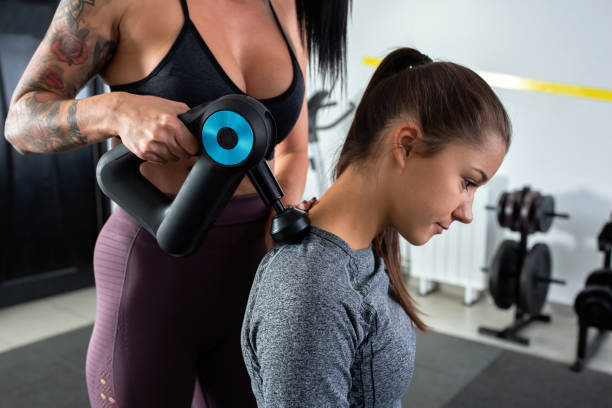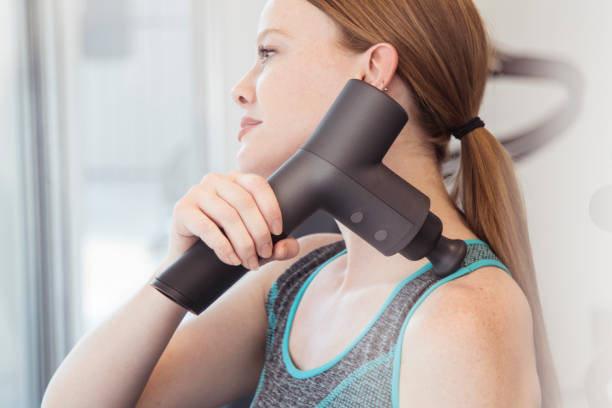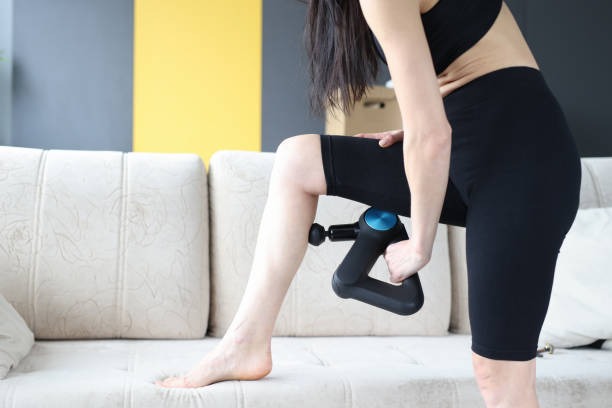
You know the power of high-frequency percussion massage guns for eliminating muscle tension. But what if you could make your recovery feel like a professional aromatherapy spa, while significantly reducing skin friction and enhancing treatment results?
The secret is simple: essential oils .
the high-frequency percussion of a massage gun with the lubricating and aromatherapeutic benefits of essential oils can elevate your experience from purely mechanical relaxation to a state of deep, luxurious restoration. However, combining a powerful vibrating machine with fluids requires delicate technique. Here’s how to safely and effectively use the four most common massage gun heads with the appropriate essential oils.
Safety First: The Golden Rules of Oil Percussion Massage
The first rule when using a massage gun with essential oils is to protect the equipment and maximize the benefits to the skin . Never allow liquids to damage the motor!
Important essential oil application principles
Never drip essential oil directly onto the massage gun: This is crucial. Do not drip essential oil onto the massage head or near the device’s vents. Liquids can damage the motor and void your warranty.
Apply the essential oil to your skin first: Take a few drops of a carrier oil (such as fractionated coconut oil, jojoba oil, or sweet almond oil) and mix it with the essential oil of your choice. Apply the mixture evenly to the muscle area to be massaged until the skin is well lubricated before activating the fascia gun.
Pay attention to lubrication: The lubricating effect of essential oils will make the fascia gun slide faster. Please start at the lowest gear and keep gliding slowly and purposefully along the muscle fibers to prevent the massage head from jumping or causing over-stimulation.

Your Therapeutic Essential Oil of Choice
Choose an essential oil blend based on your recovery goals:
Post-workout calming (relaxation): Lavender, Chamomile, or Frankincense. Suitable for use before bed.
Pre-workout concentrate (activation): Peppermint, rosemary, or citrus essential oils. Perfect for warming up in the morning or before training.
Deep chronic pain (relief): Eucalyptus, ginger, or wintergreen oil (use caution and dilute generously).
4 large massage heads: Pair massage head shape with essential oil function
Each massage head is designed for a specific purpose. By combining that purpose with the right essential oils and techniques, you can achieve a synergistic, restorative-enhancing effect.
1. Ball Head (Overall Relaxation)
Features: Largest contact area, relatively dispersed force; very suitable for large muscle groups (quadriceps, gluteus maximus, hamstrings) and whole-body warm-up or cool-down .
Essential oil combination focus: For widespread relaxation and improved circulation, use a massage oil generously infused with lavender essential oil .
Pro tip: After applying oil , set the ball head to medium-low . Massage with slow, smooth sweeping motions along the entire length of the muscle fibers, lasting 1–2 minutes per major muscle group. Think of it as “brushing” the muscles with vibrations.
2. Flat Head (Universal Lubrication and Activation)
Features: moderate contact area, even and stable force. This is the most versatile massage head, generally considered the best choice for simple lubrication and continuous tissue treatment.
Essential oil combination focus: Reduces friction with essential oil infusion. Can be activated with peppermint or rosemary essential oil blends, or simply applied evenly to any essential oil for universal use.
Pro Tip: The flat head is great for working transversely (perpendicular to the muscle fibers) in areas like the chest or upper back. Its stability ensures the oil helps you glide smoothly without losing depth.
3. U-shaped head (Fork Head) (Spinal and tendon relief)
Features: Uniquely designed to span and avoid bones (like the spine or Achilles tendon) while targeting parallel musculature on both sides (like the erector spinae or calf muscles).
Essential oil combination focus: Sensitive Area Protection and Deep Relief: Use a deeply penetrating essential oil like eucalyptus or ginger (always dilute generously) for pain around joints.
Pro Tips: Use only low settings. Apply a line of oil or lotion parallel to the muscles. Carefully move across the spine or tendons, moving slowly and purposefully . The oil is crucial to minimize the risk of the massage head accidentally slipping and striking bone.

4. Bullet Head (Trigger Point Accuracy)
Features: Minimum contact area, provides the most concentrated and strongest pressure , used to isolate stubborn trigger points (nodules) or treat thick tissues such as the palms and soles.
Essential oil combination focus: Local anesthetic with precise gliding. Apply a small amount of peppermint/wintergreen oil mixture for fast, localized numbing.
Pro tip: After applying the essential oil, switch to low or medium-low . Instead of sliding, gently press and hold the bullet tip in the exact center of the trigger point for 15–30 seconds. The essential oil helps reduce friction, allowing you to more precisely locate and apply pressure to the trigger point.
Don’t forget the basics: A final safety check
While essential oils add comfort and aroma, they can never replace judicious use.
Stop immediately: If you feel sharp, stabbing pain, stop immediately.
Avoid restricted areas: Never use a fascia gun on bones, joints (knees, elbows), nerves, arteries, or areas of acute inflammation.
Hydrate: Be sure to drink plenty of water after your massage to help flush out metabolic waste products released during the combined SMR and aromatherapy process.
Ready to transform your recovery into a complete sensory experience? Grab your favorite essential oils and let the action begin!